Table of Contents
Quick Summary
Maximize storage in a small bedroom by choosing furniture that serves two purposes (a storage bed, a nightstand with drawers), pushing the bed against the longest wall to free floor space, and using vertical space above furniture with shelves rather than adding more floor-standing pieces. Leave clear walking paths, since a cramped layout feels smaller even with more storage.
In a small bedroom, the temptation is to buy more storage furniture, another dresser, a second nightstand, but adding floor-standing pieces to an already tight room often makes the space feel and function worse, even if it technically adds storage. The bigger wins usually come from rethinking the layout itself and choosing furniture that pulls double duty.
This guide covers layout principles that add real storage capacity to a small bedroom without shrinking the usable floor space you have to move around in.
Related reading: Best Under-Bed Storage Solutions for Apartments and Condos.
Choose furniture that does two jobs
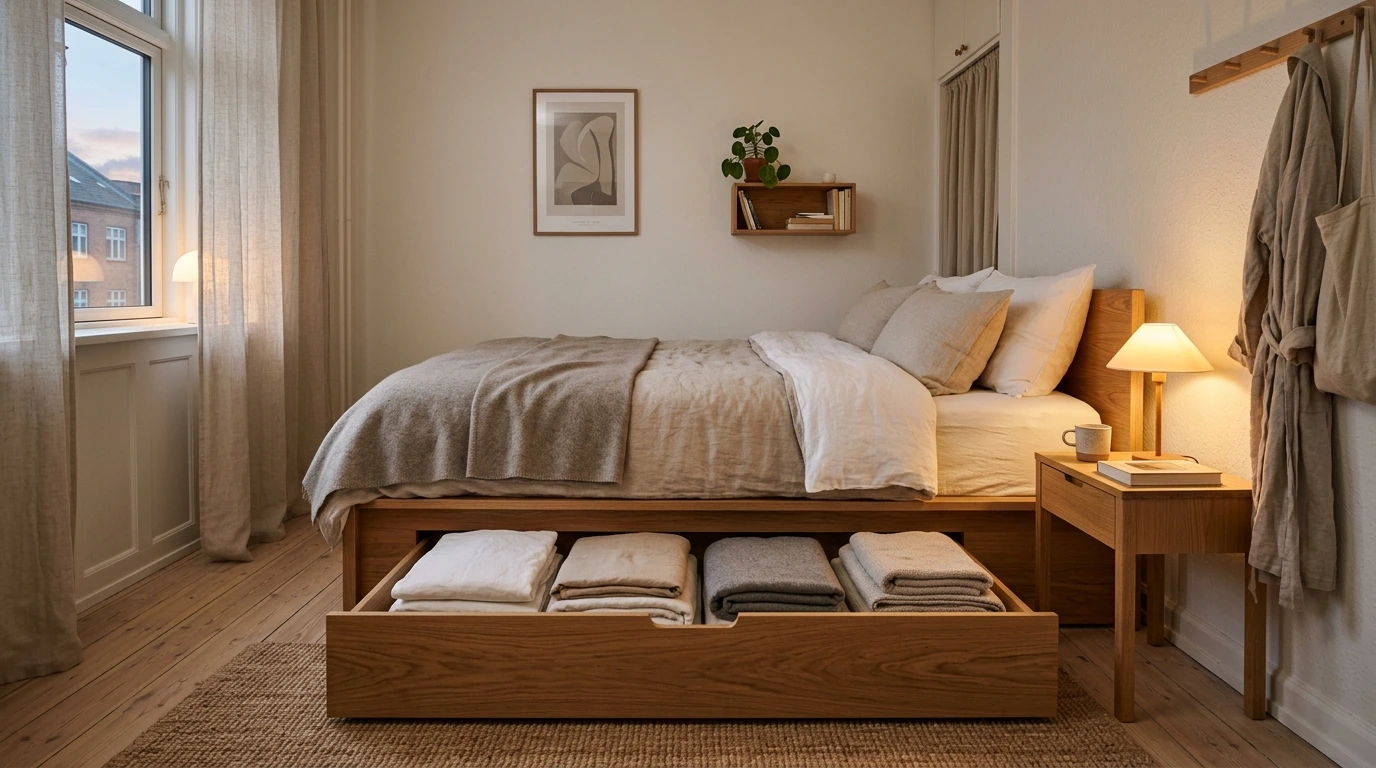
A storage bed frame with built-in drawers underneath can replace an entire dresser's worth of storage without adding any new floor footprint, since it uses space that would otherwise sit empty beneath the mattress. A nightstand with drawers instead of open shelves adds contained storage in a spot most bedrooms already dedicate to a small side table.
This same principle, covered in more depth in our guide to multipurpose furniture for small living rooms, applies just as well to a bedroom: before adding a new piece, check whether an existing piece could be swapped for a version that also stores something.
Position the bed to free up the most floor space
Pushing the bed against the longest available wall, rather than centering it in the room, usually frees up the most contiguous floor space for other furniture or simply for walking room. In a very small room, placing the bed in a corner, with two sides against walls, can free an entire extra section of floor for a dresser or desk that wouldn't otherwise fit.
Leave enough clearance on the remaining open side or sides to make the bed easily, since a layout that's technically more space-efficient but makes daily use awkward tends not to last.
If this is useful, you may also want How to Organize a Dresser Drawer Properly.
Use the wall above furniture instead of adding more floor pieces
A floating shelf above a dresser or desk adds storage or display space without taking up any additional floor footprint. This is particularly useful above a headboard-less bed, where the wall space directly above the mattress often sits completely unused.
Renter-friendly floating shelves, which mount with strong brackets or, in some cases, adhesive mounting for lighter loads, are covered in detail in our dedicated shelving guide.
We go deeper on this topic in The 30-Day Declutter Challenge for Apartments.
Keep a clear walking path, even if it means less storage
It's tempting to fill every inch of floor space with storage furniture, but a bedroom with no clear path to move around in feels smaller and more stressful than one with slightly less total storage but room to actually walk and open drawers fully. Aim for at least a consistent two-to-three-foot path between major pieces of furniture.
A real example: in one small rented bedroom, removing a bulky armchair that had become a dumping ground for clothes, and replacing it with nothing but a small wall hook for a robe, made the entire room feel and function better than any storage addition would have, simply by restoring a clear path across the floor. The lesson generalized beyond that one chair: any piece of furniture that has quietly become a dumping ground, rather than serving its intended purpose, is usually costing more usable space than it's providing, even if removing it means owning one fewer piece of furniture overall. Before adding anything new to a small bedroom, it's worth asking whether an existing piece is actually earning the floor space it occupies. It's a useful habit to revisit every six months or so, since furniture that once served a clear purpose can quietly drift into becoming a surface for clutter as routines and needs change over time. A quick, honest walk-through of the room with fresh eyes is usually enough to spot which piece, if any, has stopped pulling its weight. Taking a photo from the doorway and looking at it later, away from the room itself, is a simple trick that often makes clutter and layout problems more obvious than they are when you're standing inside the space every day.
For more like this, visit our Bedroom & Closet Organization guides.
| Change | Space impact | Effort |
|---|---|---|
| Storage bed frame | High, replaces a dresser's worth of storage | Medium, one-time furniture swap |
| Bed against longest wall | High, frees contiguous floor space | Low, rearrange only |
| Floating shelf above furniture | Medium, adds storage with no new footprint | Low-Medium |
| Removing an underused piece | Varies, often frees significant floor space | Low |
Tip
Before buying new furniture, try rearranging your current pieces first, including simply pushing the bed to a different wall. A layout change costs nothing and often reveals space you didn't know you had.
Watch Out For
Don't block a window, heating vent, or the room's main light switch with a large piece of furniture just to gain a few square feet of clear floor elsewhere, since it can create both a safety issue and a daily annoyance.
Common Mistakes
- Adding more floor-standing furniture instead of considering multipurpose pieces that replace two items with one.
- Centering the bed in the room instead of placing it against a wall to free contiguous floor space.
- Leaving wall space above furniture completely unused when it could hold a floating shelf.
- Sacrificing all walking space for maximum storage, making the room feel cramped and hard to move through.
- Keeping an underused piece of furniture, like an armchair that's become a clothing pile, out of habit rather than function.
Quick Recap
- Look for multipurpose furniture, like a storage bed or drawer nightstand.
- Position the bed against the longest wall to free contiguous floor space.
- Add floating shelves above furniture to use wall space without a new footprint.
- Keep at least a two-to-three-foot walking path between major furniture pieces.
- Remove furniture that's become a clutter magnet rather than working around it.
Frequently Asked Questions
Where should a bed go in a small bedroom?
Against the longest available wall, or in a corner with two sides against walls, generally frees up the most contiguous floor space compared to centering the bed in the room.
What's the best storage furniture for a small bedroom?
Multipurpose pieces, like a bed frame with built-in drawers or a nightstand with drawers instead of open shelves, add storage without increasing the room's furniture footprint.
Should I sacrifice walking space for more storage in a small bedroom?
It's generally not worth it. A room with a blocked walking path tends to feel and function worse even if it technically holds more storage.
How do I add storage to a small bedroom without buying new furniture?
Rearranging existing furniture, adding a floating shelf to unused wall space, and removing an underused piece can all add functional storage without a purchase.
Is a storage bed worth it for a small bedroom?
Often yes, since it can replace the storage capacity of an entire dresser without adding any new floor footprint to the room.
Conclusion
A small bedroom's storage capacity depends heavily on layout decisions, not just square footage. Choose furniture that pulls double duty, place the bed to free up contiguous floor space, use wall space above existing furniture, and resist the urge to sacrifice every inch of walking room for storage. These changes typically cost far less than a full furniture overhaul and make a bigger daily difference.

Real Home Habits Editorial Team
Real Home Habits Editorial Team writes practical, step-by-step home organization guides for renters, small-space dwellers, and busy families.