Table of Contents
- Measure your actual clearance before buying anything
- Choose the right container type for your clearance
- Consider bed risers if your clearance is too tight to be useful
- Decide what actually belongs under the bed
- Protect items from dust and moisture
- Combining bins with risers for maximum capacity
- Common Mistakes
- Quick Recap
- Frequently Asked Questions
Quick Summary
Choose under-bed storage based on your bed's actual clearance: low-profile flat bins for beds with little gap, rolling bins for beds with more clearance, and bed risers if you want to add height for taller containers. Reserve this space for out-of-season or less-frequently used items, since it's the least convenient storage zone to access.
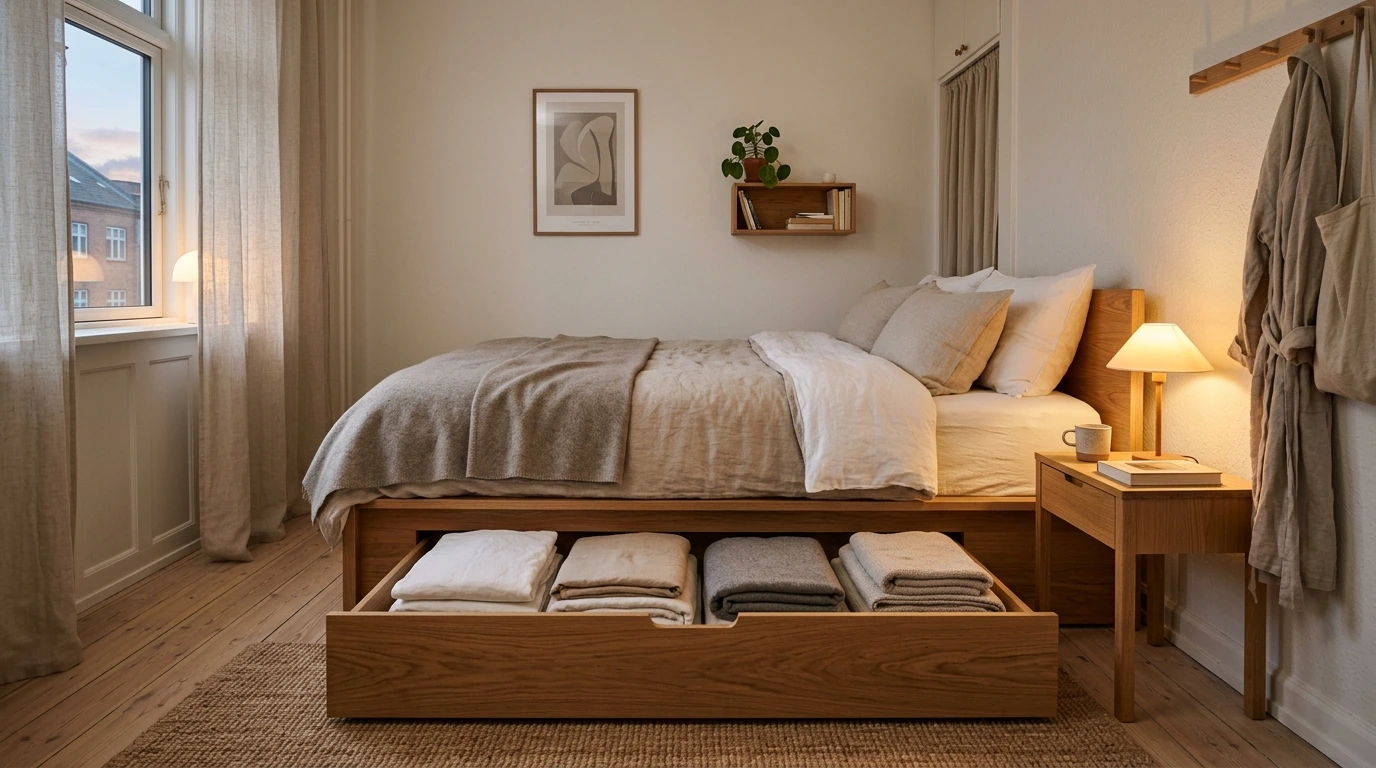
The gap under a bed is one of the largest unused storage areas in a small apartment bedroom, but it's also one of the most commonly wasted, either left completely empty or filled with a jumble of loose items that are a hassle to retrieve. With the right container matched to your bed's actual clearance, this space can realistically hold as much as a small dresser.
This guide covers how to measure for under-bed storage, which container types work at different clearance heights, and what belongs there versus what's better stored somewhere more accessible.
For more on this, see How to Organize a Small Closet and Maximize Every Inch.
Measure your actual clearance before buying anything
Lie a tape measure flat on the floor and measure the gap from the floor to the bottom of your bed frame at its lowest point, not just near the headboard. This single number determines which storage products will actually fit, and it varies far more between bed frames than most people expect, anywhere from a few inches to well over a foot.
If your clearance is very tight, note it exactly, since many flat storage bags and boxes are designed specifically for low-clearance beds and list their exact height in the product description.
Choose the right container type for your clearance
For low clearance (under 6 inches), flat zippered storage bags or shallow underbed boxes are usually the only options that fit, and they work well for soft items like sweaters, bedding, or off-season clothes that can compress slightly.
For medium clearance (6 to 10 inches), rigid underbed bins with lids offer better protection from dust and are easier to label and stack items inside without crushing them.
For generous clearance (over 10 inches) or if you're willing to add bed risers, rolling underbed bins with wheels make retrieval far easier, since you can slide them out without needing to reach and drag a heavy box across carpet or flooring.
We go deeper on this topic in How to Swap Seasonal Clothes Without Cluttering Your Closet.
Consider bed risers if your clearance is too tight to be useful
Bed risers are simple platforms that lift each leg of the bed frame by a few inches, instantly increasing under-bed clearance without needing a new bed. This is a common, low-cost option for beds that currently have almost no usable gap, and it can turn an unusable few inches into enough space for real storage boxes.
Check the weight rating of any riser against your bed frame and mattress combined weight before using them, especially for platform beds with a heavier built-in frame.

Decide what actually belongs under the bed
Under-bed storage is the least convenient spot in a bedroom to access, since it usually means kneeling down and sliding a bin out. Reserve it for items you don't need daily: out-of-season clothing, spare bedding, memory boxes, or luggage. Save more accessible storage, drawers, closet shelves, for anything you reach for on a regular basis.
In one small studio apartment with no linen closet, spare sheets and blankets moved permanently under the bed in labeled, low-profile bins, freeing an entire dresser drawer that had previously been dedicated to bedding the household barely accessed between uses.
For more on this, see Small Entryway Organization Ideas for Apartments.
Protect items from dust and moisture
Under-bed space collects more dust than most other storage areas, since it's close to the floor and rarely disturbed. Lidded, sealed containers protect contents far better than open bins or loose bags, and this matters especially for fabric items like bedding or clothing that can absorb odors and dust over time.
Combining bins with risers for maximum capacity
If a bed's natural clearance only allows for flat storage bags, adding risers to increase that clearance to 8 or 10 inches can unlock the option to use rigid or rolling bins instead, which are generally easier to pack, label, and retrieve from than a flat bag. This combination is worth considering if under-bed storage is going to carry a meaningful share of a small apartment's total storage load, rather than just holding a few spare items. The one-time cost of a set of risers is usually small compared to the value of converting an unusable few inches of clearance into genuinely functional storage.
You might also like Small Bedroom Layout Ideas That Maximize Storage.
See our full Bedroom & Closet Organization guides for more related guides.
| Clearance | Best container | Good for |
|---|---|---|
| Under 6 inches | Flat zippered storage bag | Sweaters, bedding, off-season clothes |
| 6-10 inches | Rigid lidded underbed bin | Shoes, folded clothes, small items |
| 10+ inches | Rolling underbed bin | Bulkier items, easy-access storage |
| Any height, with risers added | Standard storage boxes | Anything, once risers increase clearance |
Tip
Label each under-bed bin clearly on the end facing outward, not just the top, since you'll usually be viewing it from the side while it's still under the bed.
Watch Out For
Avoid storing anything perishable, scented strongly, or prone to attracting pests (like certain fabrics or food-adjacent items) under the bed, since this space gets less airflow and less frequent inspection than open shelving.

Common Mistakes
- Buying a bin without measuring actual bed clearance first, then finding it doesn't slide underneath.
- Storing frequently used items under the bed, where retrieval is the most inconvenient in the room.
- Using open bins instead of lidded ones, allowing dust to settle directly onto stored fabric.
- Overloading bed risers beyond their weight rating for the combined bed and mattress weight.
- Leaving the space empty entirely and using a dresser drawer instead for items that would work fine under the bed.
Quick Recap
- Measure clearance at the lowest point under the bed before buying containers.
- Match container type (flat bag, rigid bin, rolling bin) to your actual clearance.
- Add bed risers if current clearance is too tight to be useful.
- Reserve this space for occasional-use items, not daily essentials.
- Use lidded containers to protect against dust and odors.
Frequently Asked Questions
How much clearance do I need for under-bed storage?
Even a few inches works with flat, low-profile storage bags; rigid bins typically need at least 6 inches, and rolling bins work best with 10 inches or more.
Are bed risers safe to use?
Generally yes, as long as you check the weight rating against your combined bed frame and mattress weight and ensure the bed sits stably and evenly once raised.
What should I never store under the bed?
Anything perishable, strongly scented, or that could attract pests, along with items you need on a daily or near-daily basis, since retrieval from under the bed is relatively inconvenient.
Can under-bed storage replace a dresser?
It can replace a portion of dresser storage, especially for out-of-season items or spare bedding, though everyday clothing is usually still better kept somewhere more accessible.
How do I protect items stored under the bed from dust?
Use lidded, sealed containers rather than open bins or loose bags, since this space collects more dust than open shelving due to low airflow and infrequent disturbance.
Conclusion
Under-bed storage can meaningfully expand a small apartment's capacity, but only when the container matches the actual clearance and the space is reserved for items that don't need daily access. Measure first, choose flat bags, rigid bins, or rolling bins accordingly, and consider bed risers if your current gap is too tight to be useful. Done well, this overlooked space can absorb an entire drawer's worth of bedding, off-season clothes, or luggage.

Real Home Habits Editorial Team
Real Home Habits Editorial Team writes practical, step-by-step home organization guides for renters, small-space dwellers, and busy families.