Table of Contents
Quick Summary
Maximize a small closet by adding a second hanging rod below the existing one for shorter items, using the floor and shelf above for bins instead of piles, and installing slim vertical dividers for shoes and folded items. Most of the gain comes from using height and depth, not from owning fewer clothes.
A small closet often gets blamed for holding "too much," when the real issue is that most closets only use one layer of space: a single rod at one height, with a dead zone above it and a pile of shoes below it. Once you start using the closet's full height and depth instead of just its width, the same wardrobe usually fits with real breathing room.
This guide covers how to reorganize a small closet in a weekend, using double hanging rods, vertical space, and a few honest decisions about what belongs there, all without needing a custom closet system or any permanent installation.
See also 10 Shoe Storage Ideas for Small Spaces for a closer look at a related project.
Add a second, lower hanging rod
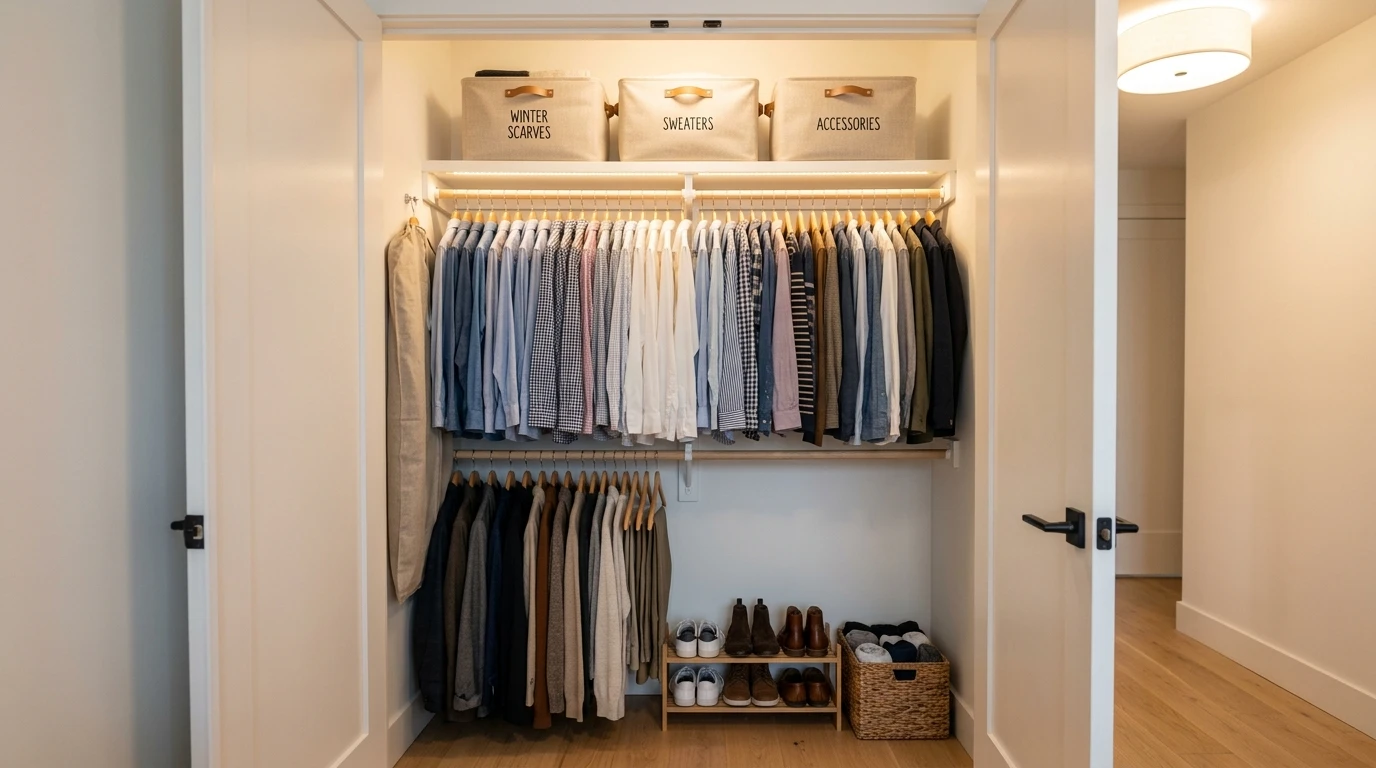
Most closets are built with a single rod set at a height meant for the longest items you own, which wastes a lot of vertical space if you own more shirts, folded pants, and shorter jackets than long dresses or coats. A second rod, hung below the first using a tension rod or an inexpensive closet rod extender, effectively doubles your hanging capacity for anything shorter than knee length.
Reserve the original, higher rod for your genuinely long items, dresses, coats, suits, and use the new lower rod for shirts, folded trousers on hangers, and jackets. This single change is often the biggest space gain available in a small closet, and most versions require no drilling.
Use the floor with bins, not piles
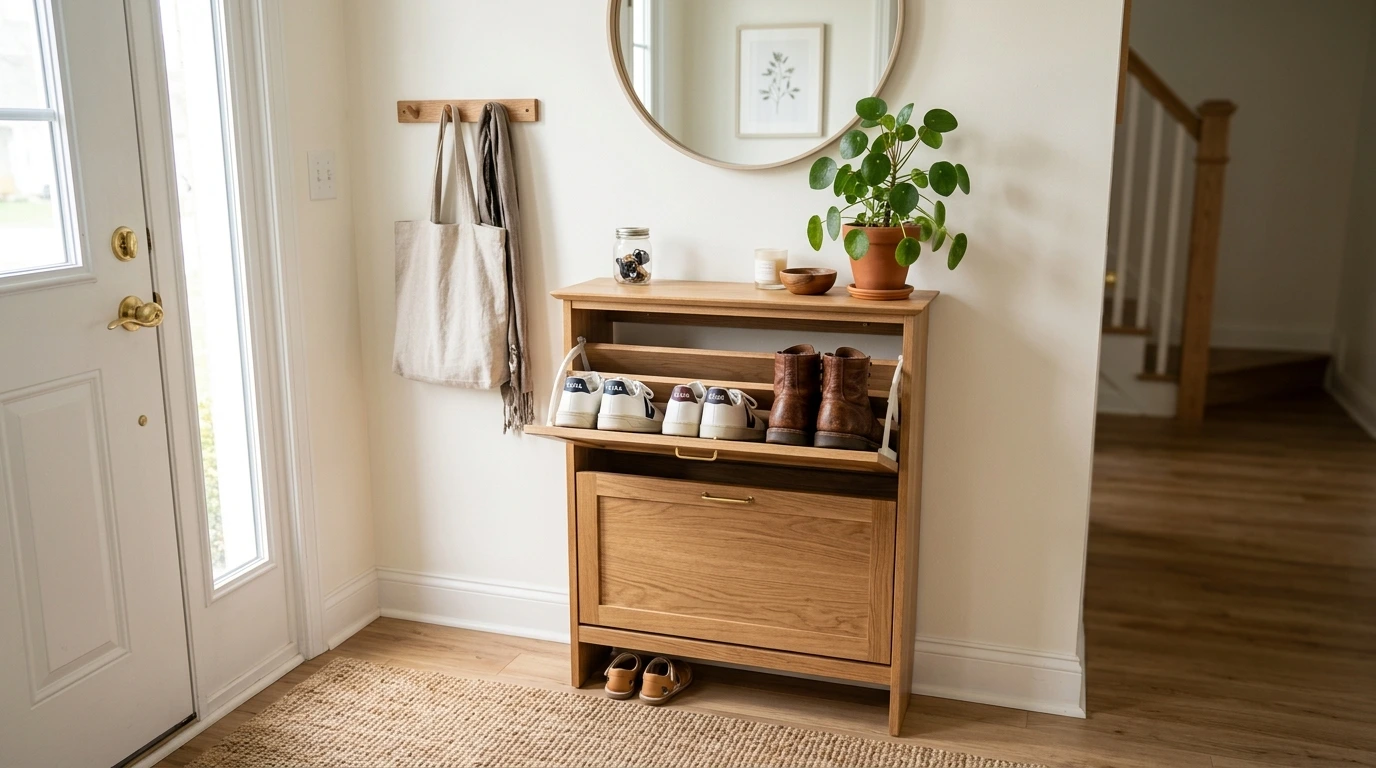
Closet floors tend to become a catch-all for shoes, bags, and anything that doesn't have an obvious hanging spot, which quickly turns into a pile that's hard to search through. A few stackable bins or a slim shoe rack turn that same floor space into distinct, browsable zones instead of one undifferentiated heap.
If your closet floor space is genuinely tight, consider a hanging shoe organizer that uses the back of the door or a side wall instead, freeing the floor for a small dresser or a bin of bulkier items like bags or bedding.
For more on this, see How to Fold Clothes Using the KonMari Method to Save Space.
Use the shelf above the rod for bins, not loose piles
The shelf above the closet rod is prime real estate that often ends up as a loose, disorganized pile of blankets, out-of-season clothes, or miscellaneous items pushed out of sight. A few matching bins or baskets on that shelf turn it into contained, labeled storage instead of a pile you have to dig through and re-stack every time you need something from the bottom.
Keep the bins you access most often toward the front edge of the shelf, and anything truly seasonal or rarely used toward the back, since that space is the hardest to reach without a step stool.
See also How to Declutter Your Home Before a Move (Step-by-Step) for a closer look at a related project.
Add slim vertical dividers for folded items and shoes
If your closet has any shelving at all, slim vertical dividers (even simple bookends or purpose-made shelf dividers) stop folded stacks of sweaters or jeans from toppling into a jumbled pile every time you pull one item out. The same idea works for shoes stored on a shelf: a divider keeps pairs from sliding into each other and forming a single messy row.
Do an honest edit before you organize, not after
Before installing anything, take five minutes to pull out anything that clearly doesn't belong, items that don't fit, haven't been worn in over a year, or are damaged beyond repair. This isn't about owning a minimal wardrobe; it's about making sure the space you're about to organize isn't organizing clutter you were going to remove anyway.
A quick real-world example: in one small studio apartment closet, roughly a fifth of the hanging space was taken up by clothes that no longer fit. Removing those first, before adding a second rod or any bins, made the whole closet feel dramatically larger before a single organizer was purchased. The organizing steps that followed, the second rod, the floor bins, the shelf dividers, only took about an hour combined, but they would have been far less effective applied to a closet still holding a fifth of its space in clothes nobody was wearing.
See also How to Swap Seasonal Clothes Without Cluttering Your Closet for a closer look at a related project.
See our full Bedroom & Closet Organization guides for more related guides.
| Upgrade | Space gained | Cost | Installation |
|---|---|---|---|
| Second hanging rod | High | $10-$20 | None to minimal |
| Floor storage bins | Medium | $10-$25 | None |
| Shelf bins/baskets | Medium | $15-$30 | None |
| Vertical shelf dividers | Low-Medium | $8-$15 | None |
| Hanging door shoe organizer | Medium | $12-$20 | Hangs on door, no drilling |
Tip
Measure the height between your existing rod and the closet floor before buying a second rod. You need enough clearance for your shortest hanging category (usually shirts) plus a few inches to spare.
Watch Out For
If you install a second rod using tension pressure rather than brackets, check its weight rating and avoid overloading it with heavy items like winter coats, which are better kept on the original, sturdier rod.
Common Mistakes
- Buying bins before measuring the shelf or floor space they need to fit into.
- Adding a second rod without first sorting out clothes that don't belong in the closet at all.
- Piling loose items on the top shelf instead of containing them in bins or baskets.
- Overloading a tension-mounted rod with items heavier than it's rated for.
- Organizing around the current wardrobe without doing a quick edit first, which just organizes clutter more neatly.
Quick Recap
- Do a quick edit and remove anything that doesn't belong before organizing.
- Add a second, lower hanging rod for shorter items.
- Contain floor items in bins instead of leaving them in a loose pile.
- Use the top shelf for labeled bins, not a loose stack.
- Add vertical dividers to any shelf holding folded items or shoes.
Frequently Asked Questions
How do I add more hanging space without a closet renovation?
A second rod hung below your existing one, using either brackets or a tension-mounted extender, roughly doubles hanging capacity for shorter items without any construction.
What should go on the closet floor?
Contained items only, bins, a shoe rack, or a small set of drawers, rather than loose piles, which are hard to search and tend to expand over time.
Do I need to declutter before organizing my closet?
It helps significantly. A quick pass to remove items that don't fit or haven't been worn in a year clears real space before you spend money on any organizer.
Is a double hanging rod safe for a rented apartment?
Tension-mounted rods that don't require drilling are generally rental-safe, though you should always check your lease and the rod's weight rating before loading it with heavier garments.
How do I organize a closet with a single high shelf and one rod?
Add bins to the shelf to contain loose items, install a second lower rod if there's clearance, and use the floor for a shoe rack or drawer unit rather than loose piles.
Conclusion
A small closet usually has more capacity than it appears to, once you stop treating it as a single hanging rod and start using its full height and depth. Add a second rod for shorter items, contain the floor and top shelf instead of piling things loosely, and do an honest edit before you organize rather than after. The result is a closet that fits your actual wardrobe with room to breathe, without needing more square footage.

Real Home Habits Editorial Team
Real Home Habits Editorial Team writes practical, step-by-step home organization guides for renters, small-space dwellers, and busy families.