Table of Contents
Quick Summary
The best shoe storage depends on location: over-the-door pocket organizers and shoe racks work well in closets, slim boot trays and cubbies suit entryways, and low-profile under-bed bins are best for off-season or rarely worn pairs. Rotate seasonal shoes out of daily storage rather than trying to fit every pair into one spot year-round.
Shoes are an awkward category to store: they're bulky, oddly shaped, and most households own more pairs than there's an obvious home for. The mistake most people make is buying one type of shoe rack and expecting it to handle every pair, from daily sneakers to rarely worn dress shoes to seasonal boots.
Here are ten shoe storage approaches, grouped by where you actually have space, so you can build a system across a few different spots instead of forcing everything into one.
For more on this, see Small Entryway Organization Ideas for Apartments.
For your closet floor
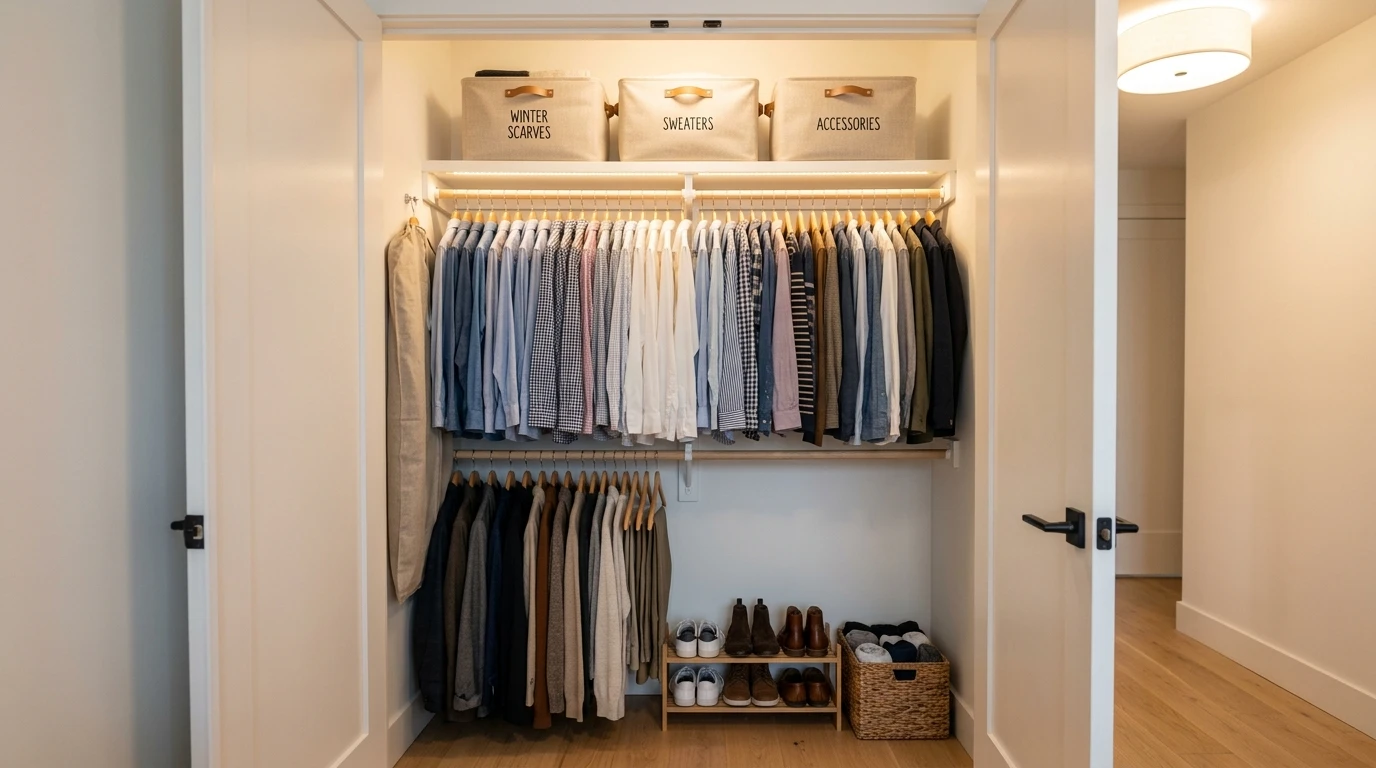
1. A tiered shoe rack fits along the closet floor and angles pairs so you can see them without shoes stacked directly on top of each other. 2. Clear stackable shoe boxes work well for shoes you wear occasionally but want protected from dust, and being clear means you don't need to open each box to find a pair.
For your closet door
3. An over-the-door pocket organizer, the classic option, holds a large number of pairs using zero floor space, which makes it one of the highest-capacity options for a genuinely small closet. 4. A slim hanging shoe rack that hooks over the closet rod itself is a good alternative if your door isn't a standard hinge style that supports an over-the-door organizer.
For your entryway
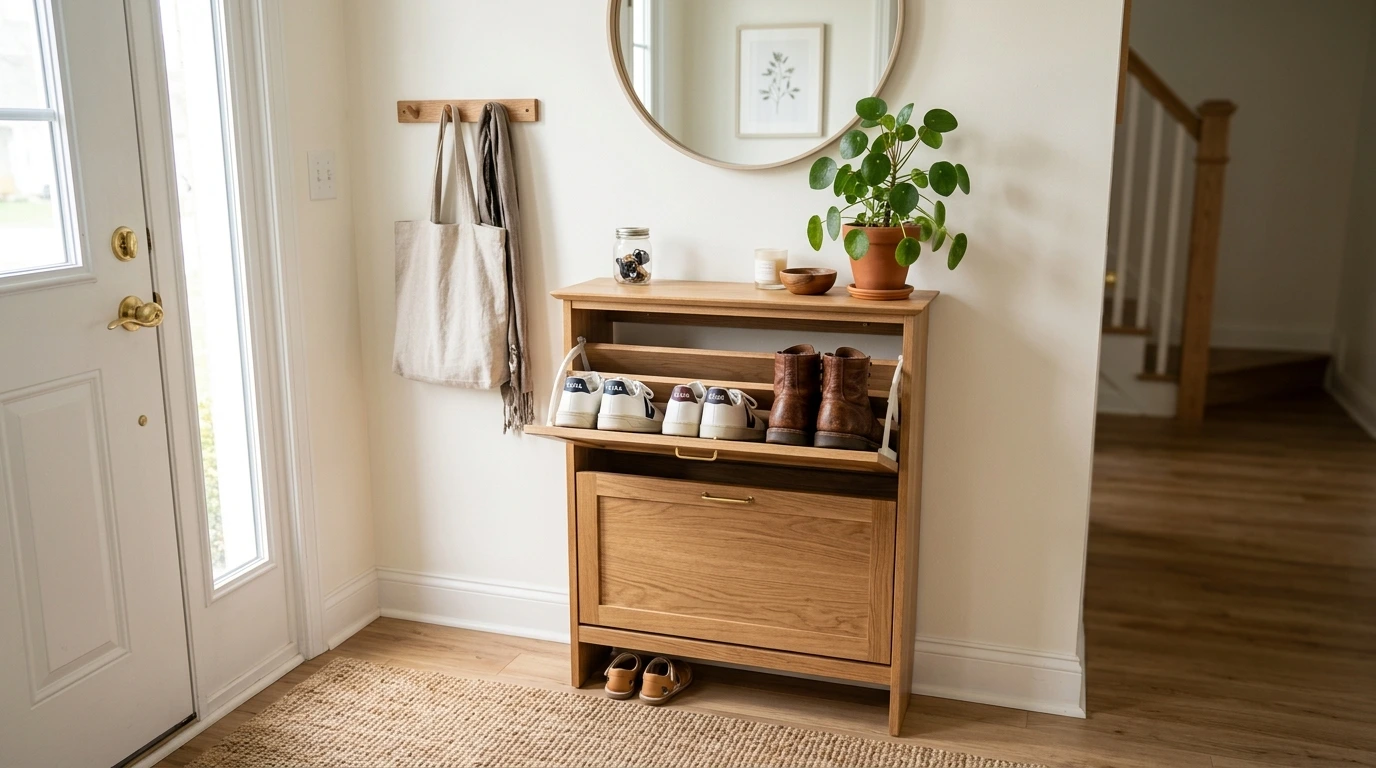
5. A slim boot tray by the front door catches dirt and water from daily-use shoes without requiring a full rack. 6. A small bench with a shoe cubby underneath doubles as a place to sit while putting shoes on and a home for the pairs worn most often. 7. Wall-mounted hooks or a slim shelf just inside the door work in a very tight entryway where even a small bench won't fit.
For off-season or rarely worn pairs
8. Low-profile under-bed bins, covered in more detail in our guide to under-bed storage, are ideal for winter boots in summer or sandals in winter, since these pairs don't need daily access. 9. A labeled bin on a closet's top shelf works for special-occasion shoes worn only a few times a year.
You might also like The 5-Minute Daily Bathroom Tidy Routine.
For a genuinely tiny space with none of the above
10. A narrow, vertical shoe cabinet designed to slide into a gap as small as a foot wide can work as a standalone piece of furniture in an entryway or bedroom corner, holding a surprising number of pairs in a very small footprint.
Building a system across more than one spot
Consider a small one-bedroom apartment with a narrow entryway, no coat closet, and a bedroom closet already tight on space. Before any changes, roughly a dozen pairs of shoes had accumulated in a pile by the front door, blocking a clear path in and out.
The fix combined three of the ideas above rather than relying on one: a slim boot tray plus two wall hooks by the door for the four or five pairs worn most days, an over-the-door pocket organizer inside the bedroom closet for the next tier of regularly worn shoes, and a single labeled under-bed bin for winter boots during the warmer months. Total cost was under $35, and the entryway pile disappeared because every pair finally had a specific, matched home instead of competing for the same patch of floor.
The broader lesson is that shoe storage rarely works as a single purchase in a real home. It works as a small set of matched solutions, each handling a different subset of a household's actual shoe collection. Trying to solve the whole problem with a single product is usually what leads to buying the wrong size rack twice before landing on something that actually fits the space. Walking through each of the household's actual shoe-drop points before buying anything, where shoes come off, where they're chosen from in the morning, where seasonal pairs wait their turn, makes it far easier to pick the right two or three tools the first time. It also helps to involve everyone in the household in that walk-through, since the spot where one person naturally kicks off their shoes may be completely different from where a housemate or family member does the same.
See our full Bedroom & Closet Organization guides for more related guides.
| Location | Best option | Capacity |
|---|---|---|
| Closet floor | Tiered shoe rack | Medium-High |
| Closet door | Over-the-door pocket organizer | High |
| Entryway (small) | Boot tray + wall hooks | Low-Medium |
| Entryway (with room) | Bench with shoe cubby | Medium |
| Under bed | Low-profile bins | Medium, off-season use |
Tip
Rotate seasonal shoes twice a year: move off-season pairs to under-bed or top-shelf storage and bring the current season's shoes into your most accessible spot. This keeps daily storage from becoming overcrowded year-round.
Watch Out For
Avoid storing damp or wet shoes in a sealed bin or closed cabinet immediately after wearing them; let them air dry first to prevent odor and mildew from developing in an enclosed space.
Common Mistakes
- Buying one large shoe rack and trying to force every pair, regardless of season, into a single spot.
- Storing wet or damp shoes directly in a sealed container without letting them dry first.
- Ignoring the entryway as a storage zone and making everyone walk shoes to a bedroom closet daily.
- Overfilling an over-the-door organizer beyond its weight capacity, causing pockets to sag or tear.
- Keeping rarely worn shoes in prime, easy-access storage instead of rotating them to a less convenient spot.
Quick Recap
- Identify the two or three spots where shoes actually accumulate in your home.
- Match a storage type to each specific spot rather than using one rack everywhere.
- Reserve your most accessible storage for daily-use shoes only.
- Move off-season or rarely worn pairs to under-bed or top-shelf storage.
- Let wet shoes dry before placing them in any enclosed container.
Frequently Asked Questions
What's the best shoe storage for a small closet?
An over-the-door pocket organizer typically offers the highest capacity for the least floor space, making it a strong first choice in a genuinely small closet.
How do I store shoes without a closet at all?
A slim entryway cabinet, a boot tray with wall hooks, or under-bed bins can all provide shoe storage outside of a traditional closet.
Should shoes be stored by the front door or in the bedroom closet?
Daily-use shoes are usually more convenient near the front door; occasional or seasonal pairs are better kept in a bedroom closet or under-bed storage where daily access matters less.
How often should I rotate seasonal shoes?
Twice a year works for most climates, once when moving into warmer weather and once when moving into colder weather, keeping only the current season's shoes in your most accessible spot.
Can I store shoes in their original boxes?
Yes, though cutting a photo from the box's end or using clear boxes makes it much faster to find a specific pair without opening several boxes.
Conclusion
There's no single best shoe storage solution because shoes accumulate in more than one place: the closet, the entryway, and sometimes a bin reserved for off-season pairs. Match a storage type to each specific location, keep your most accessible spot reserved for daily-use shoes, and rotate seasonal pairs out twice a year. Spread across a few well-matched solutions, even a small home can store a full shoe collection without a pile forming by the door.

Real Home Habits Editorial Team
Real Home Habits Editorial Team writes practical, step-by-step home organization guides for renters, small-space dwellers, and busy families.