Table of Contents
- Choose one consistent spot, even if it's small
- Choose furniture sized for the actual space
- Add vertical storage instead of a filing cabinet
- Create a visual signal that marks work hours
- Manage cables before they take over the space
- A real example: turning a hallway alcove into a working office
- Common Mistakes
- Quick Recap
- Frequently Asked Questions
Quick Summary
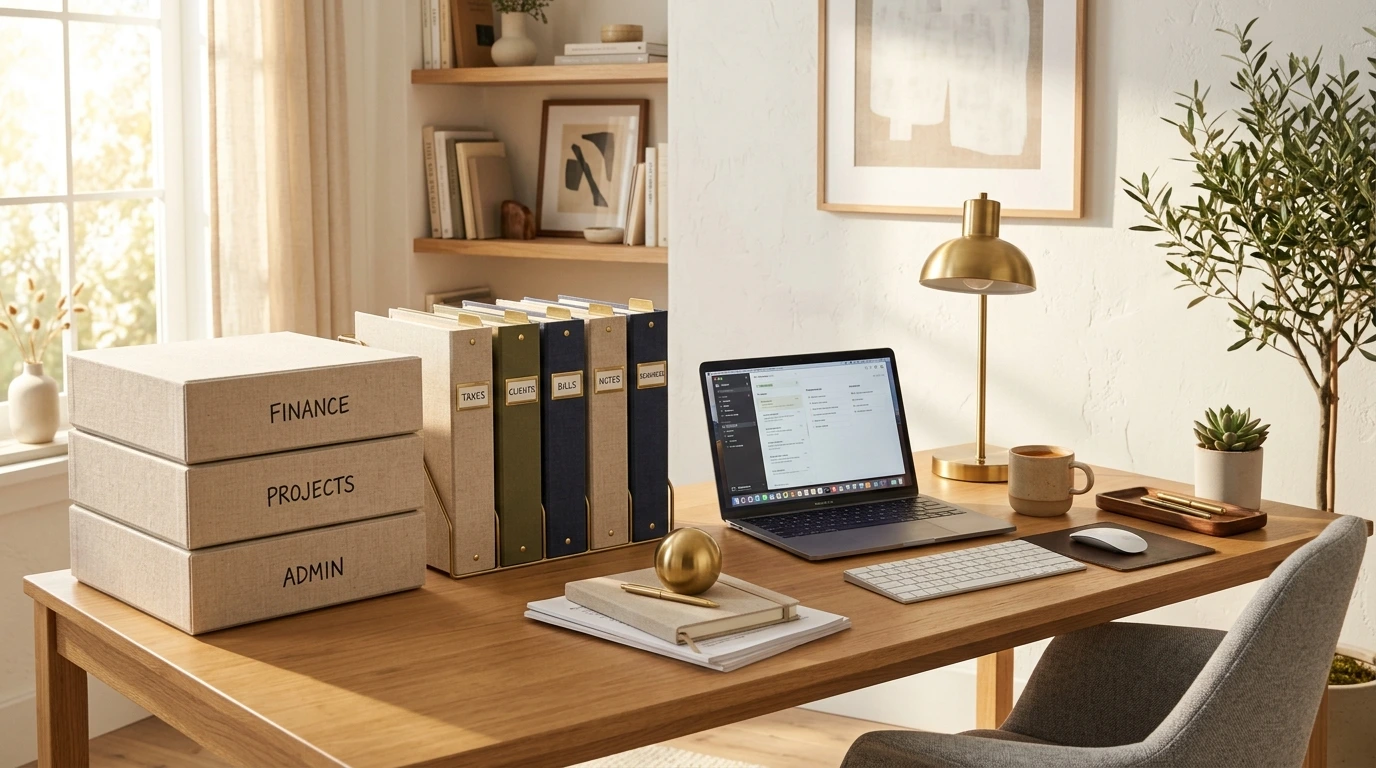
Set up a small home office by choosing one consistent spot, even a corner or alcove, rather than working from different surfaces each day. A narrow desk against a wall, a wall-mounted or floating shelf for supplies, and a visual signal like a lamp or a folding screen to mark the start and end of the workday all help a work corner function like a real office without needing a spare room.
Working remotely from a small apartment usually means there's no spare room to convert into a dedicated office, which pushes people toward working from a kitchen table, a couch, or wherever happens to be free that day. This works in a pinch, but it tends to blur the line between work time and personal time, and it means packing up and resetting a workspace every single day, which adds friction that a fixed setup avoids entirely.
This guide covers how to carve out a small but genuinely functional home office from a corner, alcove, or edge of a room, using furniture and layout choices that make the space feel distinct from the rest of the home, even without a door to close.
You might also like How to Organize Cables and Wires Without Drilling Holes.
Choose one consistent spot, even if it's small
The single most important decision in a small home office setup isn't the furniture, it's committing to one specific spot and using it consistently, rather than rotating between the kitchen table, the couch, and the bed depending on the day. A corner of the living room, a wide windowsill area, or even a closet converted into a compact desk nook can all work, as long as the same spot is used every time.
Consistency matters more than square footage here, because a fixed spot lets you leave a monitor, notebook, or reference materials set up between sessions, which removes the daily setup-and-teardown time that working from a shared surface requires.
Choose furniture sized for the actual space
A narrow desk, sometimes called a console or writing desk, that's deep enough for a laptop and a notepad but no deeper, fits into spaces a standard office desk never would, including a hallway alcove or the end of a bookshelf run. Measure the exact spot before shopping, including the clearance needed to pull out a chair, since a desk that technically fits against the wall but leaves no room to sit down comfortably won't get used.
A wall-mounted, fold-down desk is worth considering in a genuinely tight space, since it can fold flat against the wall when not in use, freeing the floor space entirely outside of work hours.
Add vertical storage instead of a filing cabinet
A floating shelf or two above the desk can hold reference books, files, and supplies without needing the floor space a traditional filing cabinet or bookshelf would require. This keeps work materials close at hand while leaving the area under the desk clear for legs and a chair.
For paperwork specifically, a slim file box that fits on a shelf works well for a small office and is covered in more detail in our guide to organizing important documents in a small home.
Create a visual signal that marks work hours
Without a door to close, it helps to have some other visual or physical cue that marks the start and end of the workday, since a desk that's always visible can make it hard to mentally clock out. A small desk lamp turned on only during work hours, a folding screen or curtain that can be drawn across the space after hours, or simply closing a laptop and turning the chair away from the desk can all serve this purpose.
This matters more in a small apartment than in a house with a spare room, since there's no physical door separating "work" from "home", the visual cue has to do that job instead.
We go deeper on this topic in Small Bedroom Layout Ideas That Maximize Storage.
Manage cables before they take over the space
A small desk with a laptop, monitor, and charger can generate a surprising tangle of cables in a short time, and in a compact space, that tangle is more visible and more likely to create a hazard underfoot. Basic cable clips or a cable sleeve, discussed further in our dedicated cable management guide, keep cords contained and out of the walking path around a small desk.
A real example: turning a hallway alcove into a working office
In one small one-bedroom apartment with no spare room, a roughly three-foot-wide alcove at the end of the hallway, previously used to dump coats and bags, became the home office. A narrow 24-inch-deep desk fit against the wall with just enough clearance to pull out a compact chair, and a single floating shelf above held a small file box and a few reference books.
The visual cue that made the split between work and personal time actually work was simple: a small desk lamp, switched on only during work hours, and a habit of closing the laptop and pushing the chair in at the end of each day. Within a few weeks, walking past the alcove with the lamp off genuinely registered as "the workday is over" in a way that working from the kitchen table never had, even though the physical space was smaller than the kitchen table by a wide margin.
See our full Living Room & Home Office guides for more related guides.
| Available space | Desk type | Best addition |
|---|---|---|
| Narrow alcove or hallway end | 24-inch-deep console desk | Floating shelf above |
| Living room corner | Small L-shaped or writing desk | Folding screen for after-hours |
| Closet (converted) | Fold-down wall desk | Slim file box on a shelf |
| Wide windowsill area | Narrow desk facing the window | Desk lamp as a work-hours cue |
Tip
Test a potential desk spot for a few days using a folding table or a stack of boxes at the right height before committing to a real desk purchase. This confirms the location actually works for your daily routine before you spend money on furniture.
Watch Out For
Avoid setting up a permanent workspace directly on a bed or a couch for regular daily use, since it tends to blur rest and work boundaries in a way that's hard to undo, and it typically leads to poor posture over a full workday.
Common Mistakes
- Rotating between different work surfaces daily instead of committing to one consistent spot.
- Buying a standard-depth desk without measuring the actual space and chair clearance first.
- Skipping any visual signal for work hours, making it hard to mentally separate work from downtime.
- Letting cables tangle and spread across the floor around a small desk.
- Choosing a desk based on looks alone rather than the specific depth and width the space allows.
Quick Recap
- Choose one consistent spot for a home office, even if it's small.
- Measure exact clearance, including chair space, before buying a desk.
- Add a floating shelf above the desk instead of a floor-standing filing cabinet.
- Set up a visual cue, like a lamp, to mark the start and end of work hours.
- Contain cables early with clips or a cable sleeve.
Frequently Asked Questions
Can I set up a real home office without a spare room?
Yes, a consistent corner, alcove, or windowsill area with a properly sized desk can function as a genuine office, even without a dedicated room or door.
What's the best desk for a small apartment office?
A narrow console or writing desk, typically around 24 inches deep, fits into spaces a standard office desk won't, including hallway alcoves and living room corners.
How do I separate work and personal time without a door?
A visual cue like a desk lamp used only during work hours, or a folding screen drawn across the space after hours, can substitute for the boundary a closed door would normally provide.
Where should I store office supplies in a small space?
A floating shelf above the desk keeps supplies within reach without using floor space, and a slim file box works well for paperwork on a small shelf.
Is it bad to work from a couch or bed regularly?
Occasional use is fine, but regular daily work from a bed or couch tends to blur rest and work boundaries and often leads to poor posture over a full day.
Conclusion
A small home office doesn't need a spare room to function well, it needs one consistent spot, furniture sized correctly for that spot, and a clear signal that marks when work hours start and end. A narrow desk, a floating shelf, and a simple cue like a lamp can turn even a hallway alcove into a workspace that feels genuinely separate from the rest of a small apartment.

Real Home Habits Editorial Team
Real Home Habits Editorial Team writes practical, step-by-step home organization guides for renters, small-space dwellers, and busy families.