Table of Contents
- Move small appliances off the counter if you use them less than weekly
- Go vertical for anything that doesn't need to lie flat
- Use under-cabinet space you're currently ignoring
- Set a hard "counter allowance"
- A real example: a counter that never had a clear spot to chop
- Common Mistakes
- Quick Recap
- Frequently Asked Questions
Quick Summary
Free counter space by moving vertical: use wall shelves, magnetic strips, and under-cabinet racks for items currently sitting on the counter. Then set a short, specific list of what's allowed to permanently live on the counter (usually 3-5 items) and store everything else, even things you use daily, in a designated nearby spot.
In a tiny kitchen, counter space isn't just about looks, it's the difference between being able to actually cook and having to shuffle three things out of the way before you can chop an onion. The instinct is to buy a bigger kitchen island or more storage, but the real fix is usually about where things live when they're not being used, not how much stuff you own.
This guide covers the specific moves that free up real counter space in a small kitchen: going vertical for items that don't need to be flat, setting a hard limit on what's allowed to stay out, and rethinking a few appliances that are taking up prime counter real estate for how rarely you use them.
You might also like Smart Under-Sink Storage Ideas for Apartments.
Move small appliances off the counter if you use them less than weekly
Small appliances are one of the biggest counter-space drains in a tiny kitchen, and not all of them earn their spot. A simple test: if you use an appliance at least a few times a week, it can stay out. If it's more occasional, a waffle iron, a stand mixer used mainly for holiday baking, it belongs in a cabinet or on a pantry shelf, even if that means a little extra effort to pull it out when you need it.
This single change often clears more counter space than any organizer purchase, because appliances take up flat, prime real estate that nothing else can use while they're sitting there.
Go vertical for anything that doesn't need to lie flat
Knife blocks, utensil crocks, cutting boards, and spice jars are all commonly left on the counter simply because there's nowhere else obvious for them to go. Most of them don't actually need counter space, they need reachable space.
A magnetic knife strip mounted on the wall (using adhesive-backed mounting if you rent) frees an entire knife block's footprint. A slim wall-mounted rack can hold cutting boards upright instead of stacked flat. Floating shelves above the counter, discussed in more depth in our guide to
For more on this, see Renter-Friendly Floating Shelf Ideas for Small Spaces.
Use under-cabinet space you're currently ignoring
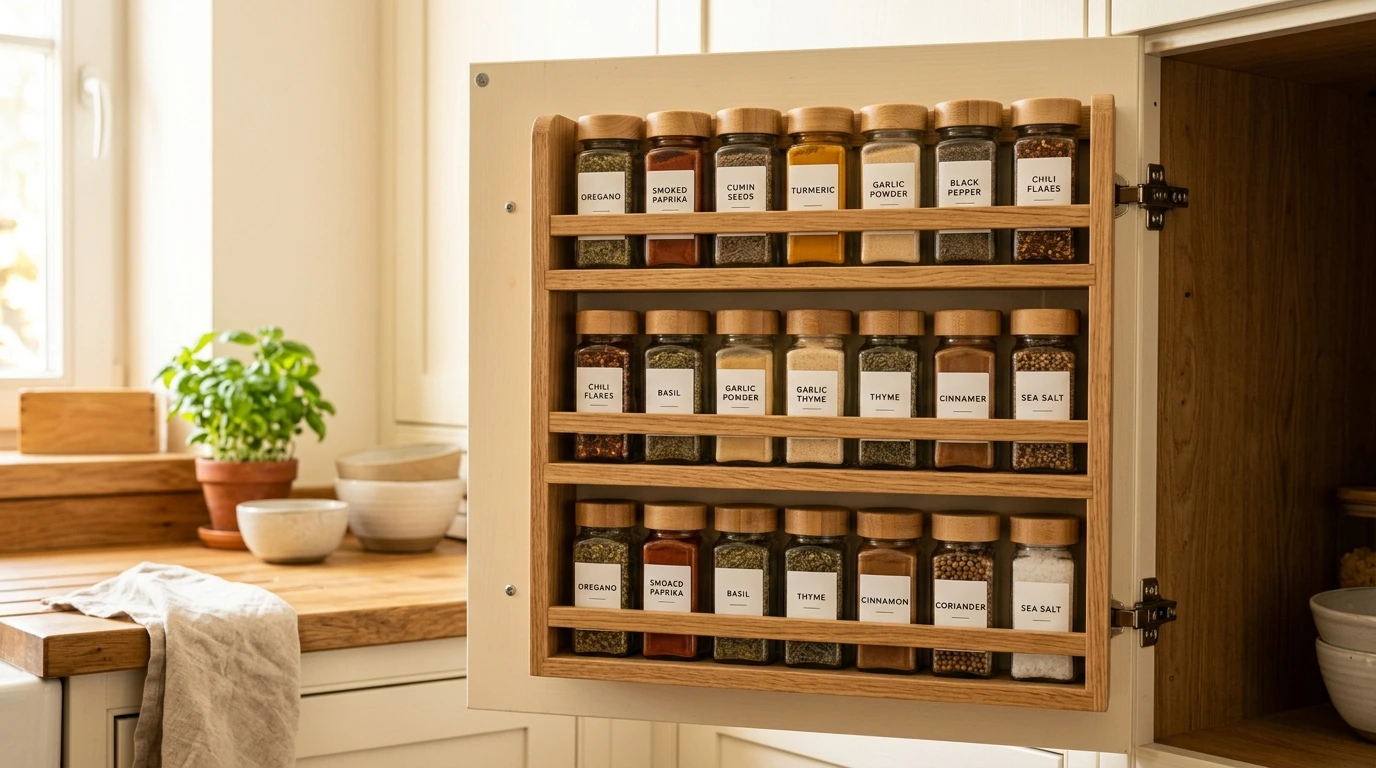
The strip of wall under your upper cabinets is almost always empty, and it's prime real estate for anything you use standing at the counter: a stick-on paper towel holder, a small under-cabinet light, or a slim spice rack that mounts with adhesive strips or tension.
This space works especially well for items you use during active cooking, since they stay within reach without ever touching the counter itself.
We go deeper on this topic in Small Living Room Layout Ideas That Maximize Space.
Set a hard "counter allowance"
Once you've relocated appliances and gone vertical with what you can, the last step is a rule, not a purchase: decide on a short, specific list of items allowed to permanently live on the counter, for most small kitchens, that's something like a coffee maker, a dish rack, and a knife block or magnetic strip. Everything else gets a home somewhere else, even if it means an extra step to put it away after use.
This is the step people skip because it doesn't involve buying anything, but it's the one that actually keeps the counter clear over time, rather than clear for one photo and cluttered again within a week.
A real example: a counter that never had a clear spot to chop
Consider a small galley kitchen where the only clear counter space, roughly a foot and a half, sat between a coffee maker on one side and a knife block, a fruit bowl, and a stack of mail on the other. Cooking meant moving the mail somewhere else every single time before there was room to actually chop anything.
The fix wasn't a bigger counter, which wasn't possible in a rental, it was relocating the knife block to a magnetic wall strip, moving the mail to a small tray by the door where it belonged in the first place, and leaving only the coffee maker and fruit bowl as the permanent counter residents. The chopping space went from a foot and a half to nearly the full counter, without removing a single item from the kitchen, just by giving each thing an actual home.
Browse more Kitchen Organization guides for additional ideas.
| Currently on the counter | Where it can go instead | Effort to relocate |
|---|---|---|
| Knife block | Wall-mounted magnetic strip | Low |
| Utensil crock | Drawer with a divider tray | Low |
| Occasional-use appliance | Cabinet or pantry shelf | Low |
| Cutting boards | Vertical slot rack or wall hook | Low |
| Spice jars | Under-cabinet or door-mounted rack | Medium |
Tip
Try the relocation for two weeks before deciding it doesn't work for your routine. Most of the friction from moving an item off the counter disappears once the new spot becomes a habit.
Watch Out For
Don't mount anything heavy, like a spice rack fully loaded with glass jars, using adhesive strips rated only for light duty. Check the weight rating and choose a screw-mounted option or a lighter-duty layout if you're near the limit.
Common Mistakes
- Buying a bigger utensil crock instead of asking whether the crock needs to be on the counter at all.
- Mounting a magnetic knife strip without checking it's rated for the weight of your actual knife set.
- Relocating an appliance to a spot so inconvenient that you stop using it, which just moves the clutter problem into a drawer.
- Leaving the "maybe" pile of small items on the counter indefinitely instead of deciding on a location the same day.
- Adding wall storage without first removing anything, which just adds clutter in a new dimension.
Quick Recap
- Move appliances used less than weekly off the counter permanently.
- Mount a knife strip or vertical rack for anything that doesn't need to lie flat.
- Use the strip of wall under your upper cabinets for standing-height items.
- Set a short list of items allowed to permanently live on the counter.
- Give every relocated item one specific new home, not a vague "somewhere else."
Frequently Asked Questions
What should always stay on a small kitchen counter?
There's no universal rule, but most small kitchens do well with three to five items: something like a coffee maker, a dish rack, and one tool caddy or knife strip, with everything else stored elsewhere.
Is a magnetic knife strip safe for renters?
Adhesive-backed magnetic strips rated for kitchen use avoid drilling, though you should always check the weight limit against your actual knife set before mounting a full block's worth of knives.
How do I get more counter space without renovating?
Relocating small appliances you use less than weekly and moving flat items like cutting boards to vertical storage typically frees the most space without any construction.
What if I don't have room for wall shelves?
Under-cabinet space, the inside of cabinet doors, and tension-rod dividers inside existing cabinets can all add storage without needing open wall space.
Why does my counter get cluttered again so quickly?
Usually because relocated items don't have one clear, convenient new home. If putting something away takes more effort than leaving it out, it will end up back on the counter within days.
Conclusion
Maximizing counter space in a tiny kitchen is less about buying new storage and more about being honest with yourself regarding what actually needs to sit out. Relocate appliances you rarely use, take flat items vertical wherever you can, and set a specific, short list of what's allowed to permanently live on the counter. The result is a kitchen where you have room to actually cook, not just a kitchen that looks clear for a day.

Real Home Habits Editorial Team
Real Home Habits Editorial Team writes practical, step-by-step home organization guides for renters, small-space dwellers, and busy families.