Table of Contents
- Use closed storage that can absorb toys quickly
- Define a play zone with a rug
- Rotate toys instead of displaying the full collection
- Involve kids in the end-of-day tidy
- Keep a small, separate spot for daily favorites
- A real example: switching the room in under five minutes
- Common Mistakes
- Quick Recap
- Frequently Asked Questions
Quick Summary
Organize kids' toys in a shared living room using a few closed bins or a storage ottoman that can hold everything during a quick end-of-day tidy, a defined play zone (like a rug) that contains where toys spread to, and a rotation system that keeps only a portion of the full toy collection out at once. This keeps the room functional for play during the day and presentable by evening.
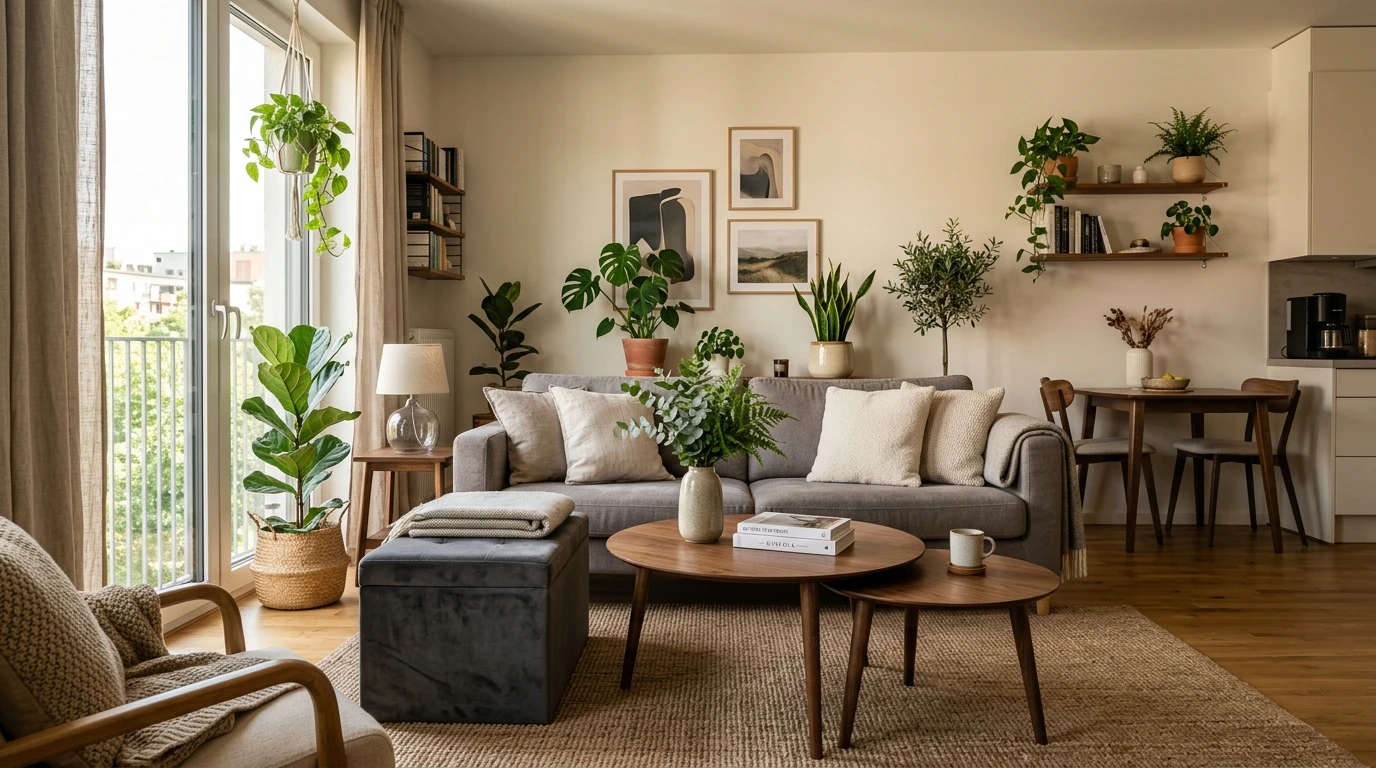
In an apartment without a separate playroom, the living room often has to serve two very different roles: a play space during the day and a normal adult living room by evening or when guests visit. Trying to permanently display or store every toy in the open tends to make the whole room feel chaotic all the time, while banning toys from the living room entirely usually isn't realistic with young kids at home.
This guide sets up a system that lets the room genuinely switch between these two modes, using closed storage, a defined play zone, and toy rotation, so play stays accessible during the day without the room looking like a toy store every evening.
Related reading: Best Multipurpose Furniture for Small Living Rooms.
Use closed storage that can absorb toys quickly
A few large, closed bins, a storage ottoman, or a bench with a lift-up seat all work as fast, low-effort places to sweep toys into at the end of a play session. Closed storage matters more than open bins here, since the goal during a quick evening tidy is visual calm, not perfect organization within the bin itself.
Choose a container large enough that a genuinely quick, few-minute tidy can absorb most of the toys currently out, rather than requiring careful sorting into multiple smaller bins before the room looks presentable.
Define a play zone with a rug
A rug, even a small one, placed in one section of the living room can function as a visual boundary that signals "toys stay in this area" without needing any physical barrier. This tends to naturally contain where toys spread to during play, making the end-of-day tidy faster since everything is roughly concentrated in one zone rather than scattered across the entire room.
You might also like Back-to-School Organization for Families in Small Homes.
Rotate toys instead of displaying the full collection
Keeping only a portion of a child's total toy collection out at any given time, with the rest stored elsewhere (a closet, under a bed, or a bin in a different room) and rotated in every few weeks, reduces the volume of toys competing for the living room's limited storage at once. This also tends to renew a child's interest in toys that have been "away" for a while, functioning similarly to getting something new.
Involve kids in the end-of-day tidy
Age-appropriate involvement in the tidy routine, even for young children, both reduces the parent's workload and helps kids learn where things belong. A simple, consistent rule, "toys go in the big bin before dinner", paired with closed storage that doesn't require sorting, keeps this realistic for young kids to actually participate in successfully.
Related reading: 15 Bathroom Storage Ideas Under $30.
Keep a small, separate spot for daily favorites
A small basket or shelf reserved specifically for a handful of daily favorite toys, separate from the main rotation storage, can stay out more consistently without disrupting the overall system, since it's a small, contained exception rather than an open invitation for everything to stay out.
A real example: switching the room in under five minutes
In a small apartment living room shared between daytime play and evening relaxation, toys had previously spread across the entire floor by the end of most days, making a quick tidy before dinner guests or bedtime feel like a significant undertaking each time.
The fix combined three elements: a soft play rug in one corner of the room defining the play zone, two large lidded bins tucked beside the couch for a fast sweep-in tidy, and a rotation system keeping roughly a third of the full toy collection out at once, with the rest stored in a bedroom closet and swapped every three weeks. The end-of-day tidy, with a four-year-old helping toss toys into the bins, dropped to under five minutes on most days, and the living room reliably looked presentable again well before dinner. The rotation schedule, initially just a note on the kitchen calendar, became routine enough within a couple of months that it no longer needed an active reminder at all.
For more like this, visit our Living Room & Home Office guides.
| Element | Purpose | Effort to maintain |
|---|---|---|
| Closed bins or storage ottoman | Fast end-of-day tidy | Low, a few minutes daily |
| Defined play zone (rug) | Contains where toys spread to | None, passive boundary |
| Toy rotation (every 2-4 weeks) | Reduces total toys competing for space | Low, occasional swap |
| Small daily-favorites basket | Lets a few loved toys stay out consistently | None, self-contained |
Tip
Choose bins without complex sorting systems for young children's daily tidy routine; a single "everything goes here" bin is far more likely to actually get used consistently than a multi-bin sorting system that requires more thought.
Watch Out For
Check that any storage ottoman or bench with a lid used for toy storage has a soft-close hinge or safety mechanism if young children will be opening and closing it themselves, to avoid a heavy lid closing unexpectedly on small fingers.
Common Mistakes
- Trying to permanently display or store every toy owned in the living room at once.
- Using open bins for a fast daily tidy when closed storage would look calmer with less sorting effort.
- Skipping toy rotation and letting the full collection compete for the same limited space indefinitely.
- Choosing a complex multi-bin sorting system for young kids who won't realistically maintain it.
- Using a storage ottoman or bench without a safe hinge mechanism around young children.
Quick Recap
- Set up closed storage large enough for a fast, few-minute daily tidy.
- Define a play zone with a rug to contain where toys naturally spread.
- Rotate a portion of the toy collection in and out every few weeks.
- Involve kids in a simple, consistent end-of-day tidy routine.
- Reserve a small separate spot for a handful of daily favorite toys.
Frequently Asked Questions
How do I keep a shared living room from looking like a playroom all the time?
Closed storage that can quickly absorb toys, a defined play zone, and toy rotation together let the room switch between play mode during the day and a calmer adult space by evening.
Should toy storage be open bins or closed bins?
Closed bins tend to work better for a fast, low-effort daily tidy in a shared living room, since the goal is quick visual calm rather than detailed sorting.
How often should toys be rotated?
Every two to four weeks works well for many households, keeping only a portion of the full collection out at once while the rest stays in secondary storage.
How do I get young kids to help tidy up toys?
A simple, consistent rule paired with a single easy-to-use bin, rather than a complex sorting system, makes it realistic for young children to participate successfully.
Is it safe to use a storage ottoman for toys around young kids?
Choose one with a soft-close hinge or other safety mechanism if children will be opening and closing the lid themselves, to prevent it from closing unexpectedly on small fingers.
Conclusion
A small living room can genuinely serve both as a play space and an adult living room, but it needs a system built for fast transitions rather than an attempt to permanently display every toy. Closed storage, a defined play zone, and toy rotation together make the daily switch between play mode and evening mode realistic, even with a young child actively using the room every day.

Real Home Habits Editorial Team
Real Home Habits Editorial Team writes practical, step-by-step home organization guides for renters, small-space dwellers, and busy families.