Table of Contents
- Understand what each zone of your fridge is actually for
- Set up an eye-level "eat soon" zone
- Practice first-in-first-out every time you put groceries away
- Use clear bins to group categories, not just to look tidy
- A real example: the leftovers that kept getting thrown out
- Common Mistakes
- Quick Recap
- Frequently Asked Questions
Quick Summary
Reduce fridge-related food waste with a first-in-first-out layout: move older items to the front of each shelf every time you put new groceries away, keep a visible "eat soon" bin at eye level, and match each drawer or shelf zone to the food type it actually keeps best (high humidity for leafy greens, lower shelves for raw meat, door shelves for condiments only).
Food waste in a small kitchen usually isn't about buying too much, it's about buying groceries and then losing track of them behind other things in the fridge. A container of leftovers pushed to the back, a bag of greens hidden behind last week's takeout box, a sauce jar that gets forgotten every single time you open the door: none of that is really a shopping problem. It's a layout problem.
This guide sets up a fridge organization system built around one core habit, rotating older food to the front, combined with zones matched to what each part of the fridge actually does best.
We go deeper on this topic in The 10-Minute Daily Declutter Routine for Small Spaces.
Understand what each zone of your fridge is actually for
Refrigerators aren't uniformly cold. The back of the main compartment tends to be coldest, the door is the warmest part of the fridge (since it's exposed to room air every time it opens), and drawers are typically designed with different humidity levels for produce.
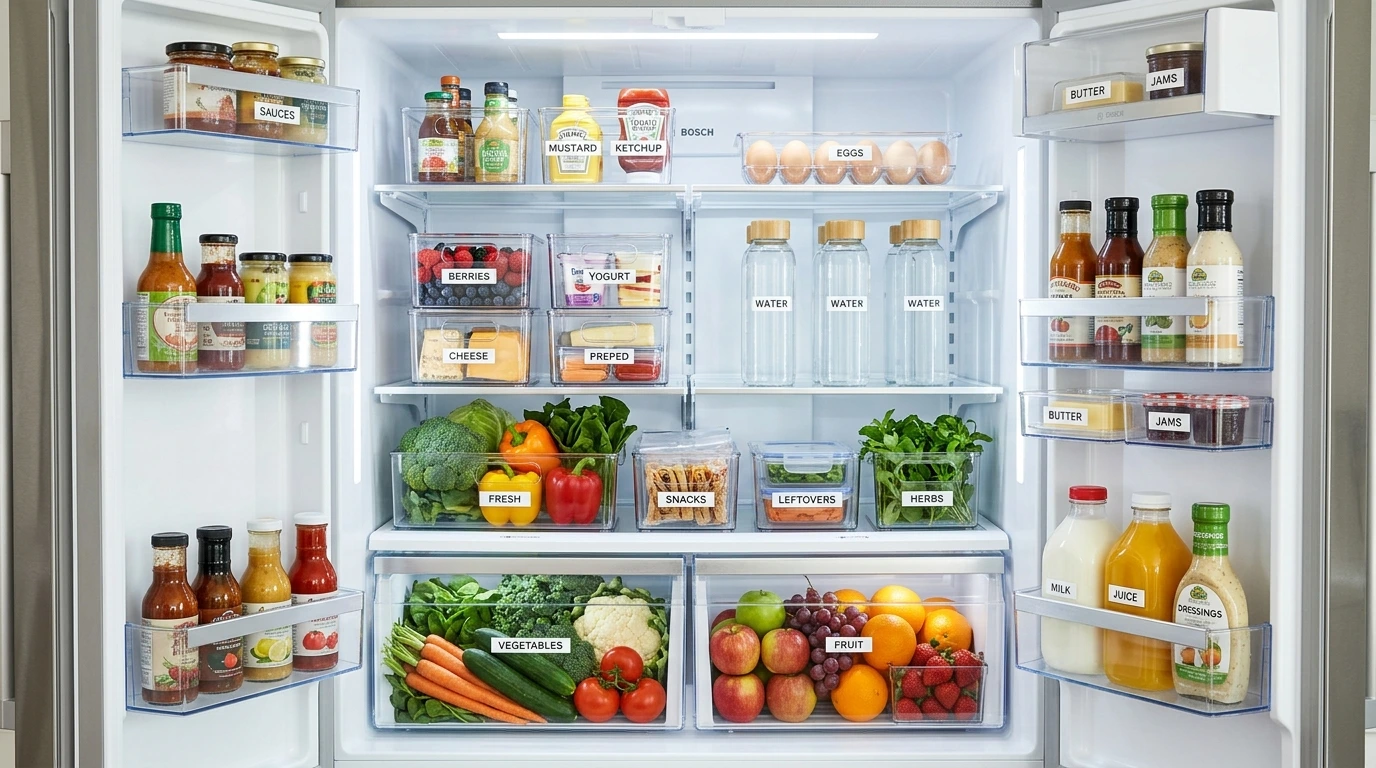
Matching food to these zones isn't just about tidiness, it directly affects how long things last. Condiments and anything with natural preservatives (like jams or pickles) are fine on the door. Milk and eggs do better on a middle or lower shelf, not the door, despite the built-in door shelf many fridges have for them. Raw meat belongs on the lowest shelf, both because it's coldest there and so any drips don't fall onto other food.
Set up an eye-level "eat soon" zone
Dedicate one clear bin or one shelf section, at eye level, to leftovers and items nearing their use-by date. This is the single most effective food-waste habit for a small fridge, because it turns "I forgot this was in there" into "I see this every time I open the door."
Move items into this zone as soon as you notice they're getting close to their date, rather than waiting for a weekly cleanout, so the zone stays a live, useful signal rather than a forgotten pile of its own.
Practice first-in-first-out every time you put groceries away
First-in-first-out (FIFO) means new groceries go behind or below existing ones of the same type, so the oldest items stay in the most visible, most reachable spot. This takes a few extra seconds when you're putting groceries away, but it's the habit that actually prevents the "found this expired in the back" problem, more than any bin or label.
This matters most for items you buy regularly, milk, yogurt, produce, since those are the categories most likely to have an older item quietly expiring behind a newer one.
See also Small Home Office Setup Guide for Remote Workers for a closer look at a related project.
Use clear bins to group categories, not just to look tidy
Grouping similar items into a shared, see-through bin (all the sauces together, all the cheese together) means you can pull one bin forward to see everything in that category at once, instead of scanning shelf by shelf. This also makes shelves easier to wipe down, since you're lifting one bin instead of a dozen individual jars.
A real example: the leftovers that kept getting thrown out
A common pattern in a busy household: home-cooked leftovers go into the fridge with good intentions, get pushed toward the back by the next grocery trip, and get thrown out a week later, untouched, when the container is finally rediscovered. Over a few months, that adds up to a noticeable amount of wasted food and money, and it isn't a motivation problem, it's a visibility problem.
The fix was simple: one clear bin, placed at eye level on the most visible shelf, reserved only for leftovers and anything within two days of its use-by date. Every time groceries came in, that bin got a 10-second glance before anything else got put away. Within a month, the household reported eating far more of what was cooked instead of throwing it out, without changing what or how much they cooked, only where it was stored.
The same principle scales to any size fridge: waste tends to happen in the parts you don't see every time you open the door, so the fix is almost always about visibility and placement rather than portion sizes or grocery budgets.
See our full Kitchen Organization guides for more related guides.
| Zone | Best for | Avoid storing here |
|---|---|---|
| Top/middle shelf (coldest) | Milk, eggs, ready-to-eat leftovers | Nothing in particular |
| Bottom shelf (coldest, contained) | Raw meat and fish | Anything eaten raw and unwashed |
| High-humidity drawer | Leafy greens, herbs | Fruits that release ethylene gas |
| Low-humidity drawer | Apples, pears, produce that ripens fast | Delicate leafy greens |
| Door shelves (warmest) | Condiments, jams, drinks | Milk, eggs |
Tip
Do a two-minute "front sweep" every time you unpack groceries: quickly glance across each shelf and push anything older toward the front before putting new items behind it.
Watch Out For
Never store raw meat above other food, even briefly, since drips can contaminate anything below it. Keep raw meat on the lowest shelf or in a sealed container regardless of how you organize the rest of the fridge.
Common Mistakes
- Storing milk and eggs in the door, where temperature fluctuates most, instead of a colder interior shelf.
- Restocking groceries by pushing new items to the front instead of behind existing ones.
- Using opaque containers for leftovers, which makes them easy to forget entirely.
- Overcrowding shelves so tightly that air can't circulate, which actually makes the fridge less effective at keeping food cold.
- Skipping a regular check of the "eat soon" zone, letting it quietly turn into just another forgotten shelf.
Quick Recap
- Match food types to the zone of the fridge that keeps them best.
- Set up one visible, eye-level "eat soon" bin for leftovers and near-date items.
- Practice first-in-first-out every time you put groceries away.
- Group similar items into clear, pull-forward bins.
- Do a quick front-to-back sweep whenever you restock.
Frequently Asked Questions
Where is the coldest part of a refrigerator?
Typically the back of the middle-to-bottom shelves, while the door is the warmest zone since it's exposed to room-temperature air every time it opens.
Should eggs go in the fridge door?
It's better to store eggs on an interior shelf rather than the door, since the more stable, colder temperature helps them stay fresh longer, even though many fridges include a door shelf shaped for egg cartons.
How do I stop forgetting about leftovers in the fridge?
Dedicate one visible, eye-level spot specifically to leftovers and near-date items, and move things there as soon as you notice them getting close to expiring rather than waiting for a full cleanout.
What is first-in-first-out and why does it matter for food waste?
It means placing new groceries behind or below existing stock of the same item, so older food stays in the most visible spot and gets used before it expires.
Can overcrowding a fridge cause food to spoil faster?
Yes, packing shelves too tightly blocks air circulation, which can create warm spots and reduce how evenly the fridge keeps food cold.
Conclusion
A well-organized fridge doesn't need more bins or a bigger appliance, it needs a layout that matches how food actually behaves and a habit of rotating older items to where you'll actually see them. Set up your zones once, keep an eye-level "eat soon" spot, and practice first-in-first-out every time you shop, and you'll notice fewer forgotten containers and less food thrown out simply because it disappeared behind something else.

Real Home Habits Editorial Team
Real Home Habits Editorial Team writes practical, step-by-step home organization guides for renters, small-space dwellers, and busy families.